Overview
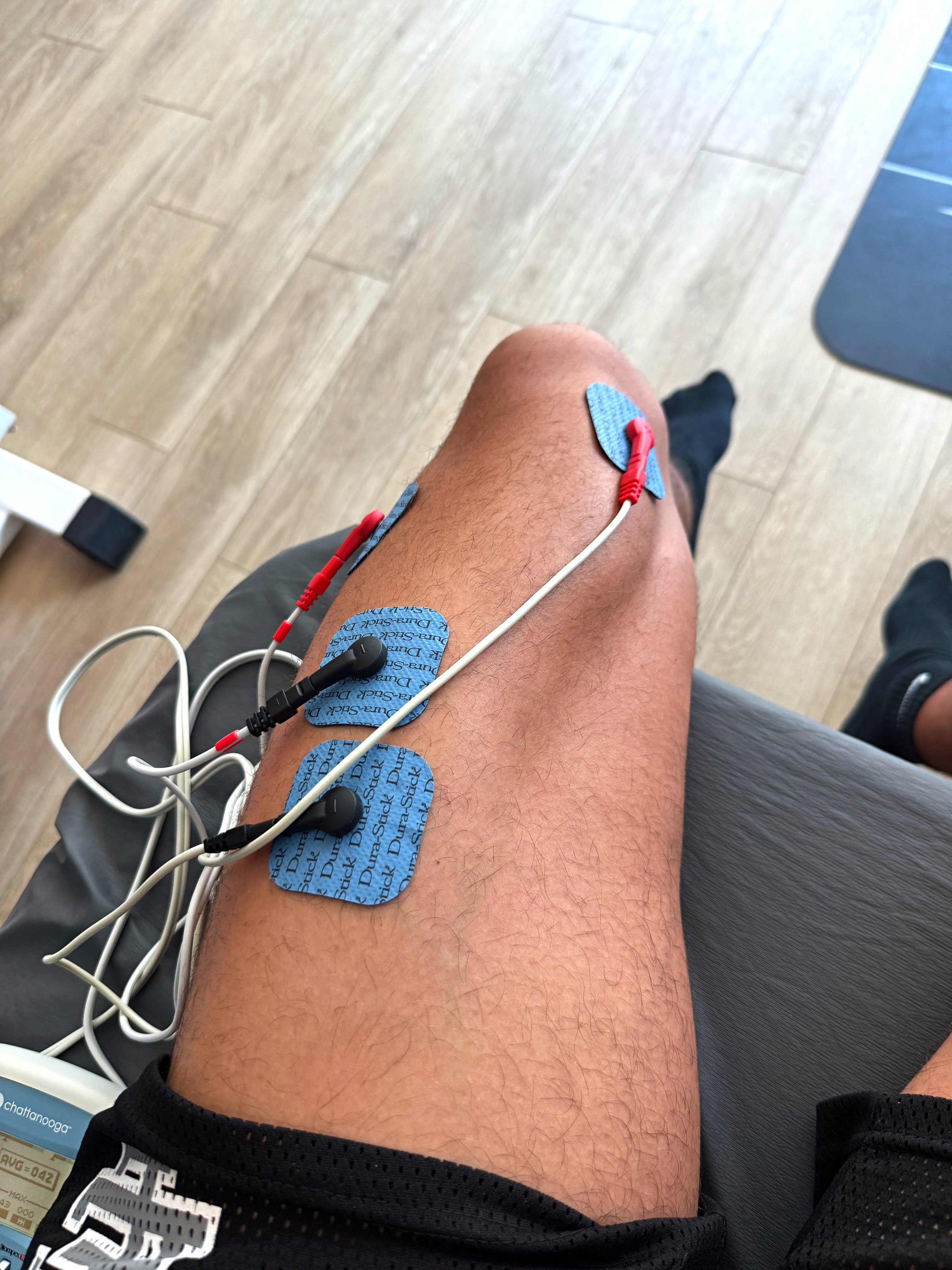
ContextIn May 2025, I sustained an avulsion fracture of the anterior tibial tuberosity during sprint training. The fragment was surgically fixed with two screws in September 2025, followed by a second intervention in March 2026 to remove the hardware after confirmed bone consolidation.
This page documents the full 14-month rehabilitation process — not as a medical report, but as a structured project. Every phase was planned with defined criteria, tracked daily, and adjusted based on measurable data. The goal was never just to recover — it was to return stronger than before the injury.
Since May 2026, I train under the supervision of Nathan Chupa, sport physiotherapist, for the final return-to-sport phase.
Phase Timeline
StructureIsometric Preparation Block
Nov 2025 – Mar 2026Rather than waiting passively for Surgery II, I used the hardware-in-place period to build the strongest possible physical base for the post-op return. From November 2025 onwards, I designed and ran a structured gym block focused entirely on what the injury allowed.
The goal was specific: arrive at the screw removal surgery with a muscle baseline high enough to compress Phase III recovery by weeks. Zero sprint work. Zero plyometrics. Just controlled, progressive overload within safe ROM.
Bilateral hip thrust
Progressive loading · primary glute/hamstring driver
Isometric quad holds
Pain-free ROM only · neural activation maintenance
Single-leg pressing
Contralateral leg — symmetry preservation
Upper body volume
Bench, row, pull — total body strength maintenance
Trap bar deadlift
Controlled eccentric · posterior chain development
Daily Tracking System
MethodEvery decision in this protocol was data-driven. Load progressions, phase transitions, and rest days were all governed by pre-defined metric thresholds — not intuition. If a gate criterion wasn't met, the progression didn't happen.
Gate criteria example: load progression in lower body only cleared when pain ≤ 2/10, no swelling increase within 24h of previous session, and symmetry index > 80%.
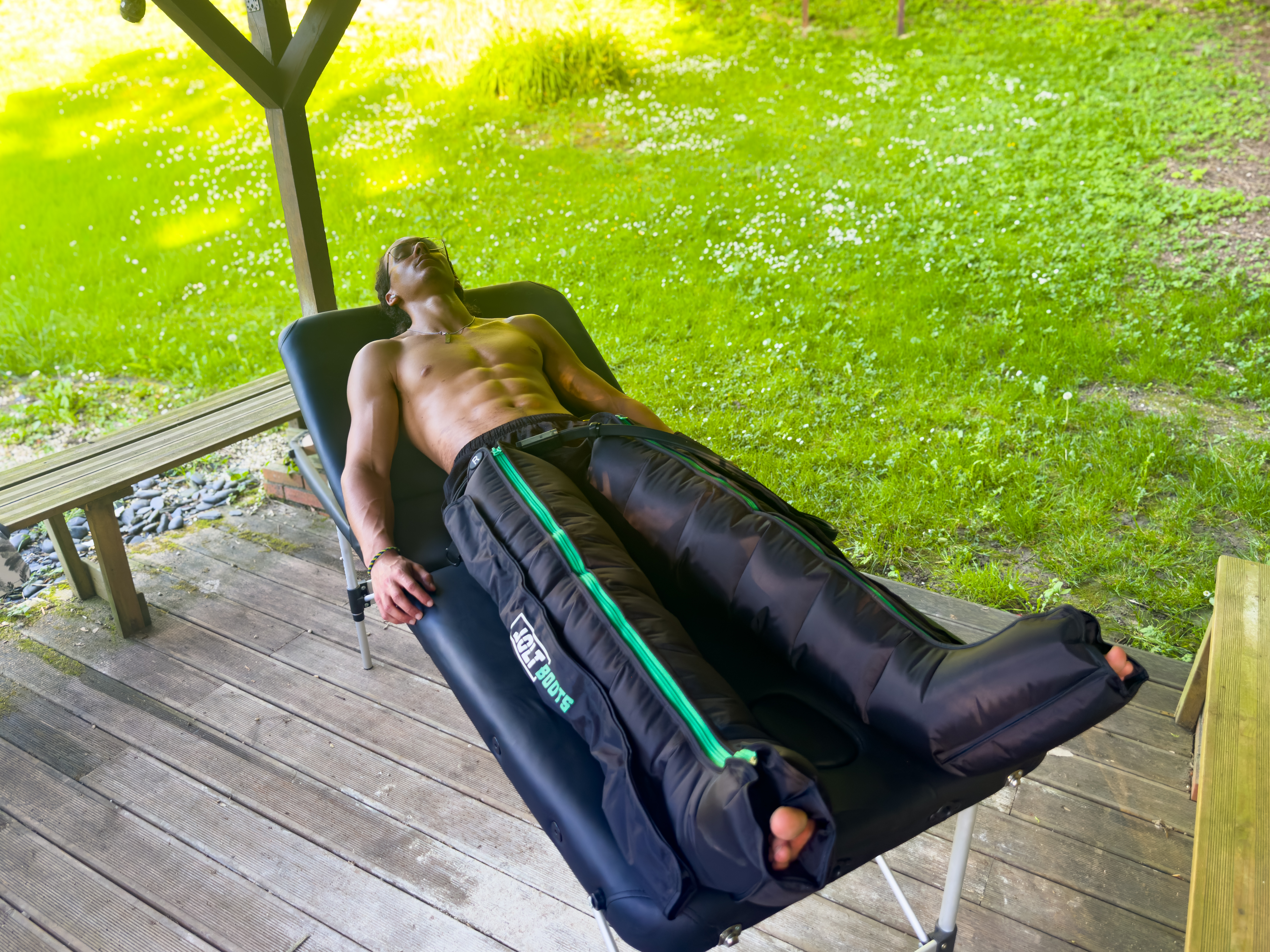
Recovery modality
Pressotherapy
Integrated throughout all phases for lymphatic drainage and swelling management. Reduces post-session inflammation and accelerates tissue clearance — used as a direct input to the swelling index tracking metric.
Quality Matrix
Week S06 · D+76Progression is governed by a 6-quality unlock system — each quality is locked until the previous one clears its criteria gate. No autonomous escalation: load increases require physiotherapist validation.
Unilateral Heavy Force
3 consecutive weeks cleared · peak 1.25/10 · 7/7 compliance
Controlled Plyometrics
2 sessions/week · aggregate load 0.25/10 · bilateral → unilateral
Reactive Plyometrics
Blocked — Q2 not yet fully validated
Sub-maximal Sprint
5×2min @60–70% HRmax · max 0.5/10 · 0 residual at day +1
Maximal Sprint
Blocked — Q4 not yet fully validated
Competition
Blocked — upstream phases pending
Quality Unlock System v3 — generated 25/05/2026. Session data from S06 (May 18–24, 2026).
Current Status
Phase 2 Complete · D+76Clinical Data — S06
Next milestone
Physio appointment May 29, 2026 — Phase 3 entry decision. All Phase 2 criteria are met (6/6). Agenda: Phase 3 entry validation, LSI reassessment, running volume escalation, plyometric escalation clearance.
Physiotherapist
Weekly supervised sessions with Nathan Chupa, sport physiotherapist. All load escalations require in-session validation — no autonomous progression.
Target milestone
Full competition clearance — September 2026
76%
LSI — May 14
6/6
Phase 2 criteria
0.17
avg pain /10